



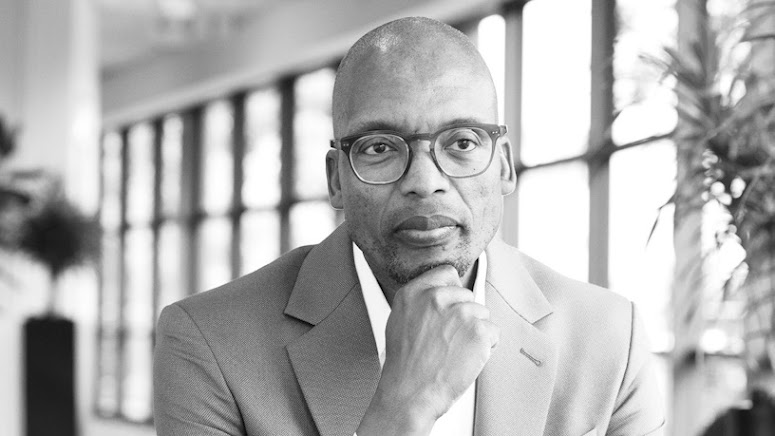

For a man who has clocked up almost three decades of experience in engineering and telecoms, an internet search on Tlhabeli Christopher “TC” Ralebitso turns up frustratingly little. Even his LinkedIn profile is scanty, which he acknowledges with a dismissive comment about not enjoying the limelight.
The reason why publicity-shy Ralebitso has agreed to do an interview becomes clear once he starts talking about Zutari – another name with which you may not be familiar. This engineering consultancy that recently made him its CEO in Africa is doing world-class things, things he’s itching to talk about. “The types and scale of projects that we execute are, in my mind, some of the best you’re going to see around the world,” he says. “I don’t say that lightly. The impact and the depth of skill and capability that exists within Zutari should be known. Hopefully we’ll start to make ourselves visible and tell the story of the impact we’re making.”
Zutari’s core business involves the design and oversight of big infrastructure projects in water, transport, energy, resources, and the built environment, big things you can see and touch, which pleases Ralebitso immensely.
“I like things to be visible,” he says. “That’s why the financial world, venture capital or the purely digital world are less satisfying, because you don’t really see it. Purely digital businesses add value in different ways, but it’s not really visible.”
He glances over his shoulder from his office in Johannesburg and says: “When I look out of the window, I can see a maintenance truck and I can see people, and the tangibility of it really makes it exciting and meaningful.”
In Rosebank, Zutari has been working on one of the country’s most environmentally sustainable buildings. Across South Africa, it’s involved in building new roads, bridges and tunnels for Sanral. It’s
worked on Lesotho’s Highlands Water Project that brings water to Gauteng; set up power transmission lines in Kenya and Angola; built roads in Botswana; and has projects in the pipeline for mining clients in Ghana. “We have a very wide reach across the continent, and some of the more iconic projects that you see are probably because we touched them,” he says.
The types and scale of projects that we execute are, in my mind, some of the best you’re going to see around the world.
Zutari has existed in various iterations for 94 years, and works throughout Africa and in the Middle East, and supports companies in Australia and New Zealand. The team is seeking European opportunities too. “The specifications may vary from region to region, but the projects are very similar, and we have the expertise and understanding to build any type of infrastructure in any environment,” he says. Zutari’s energy team, for example, does exactly the same things as a German energy team. “But we have the specific advantage of being able to work in environments where there’s not a lot of infrastructure to support the work we do.
To some extent, we have more resilient people and more creative solutions than in the First World, because we’re able to execute projects in an environment that’s not immediately suitable for the level and scale of infrastructure that’s needed.”
IT-wise, it’s creating a platform to support that global outlook by allowing people to work and collaborate from anywhere. “The ability to have teams spread out across different geographies for a project is absolutely necessary, and that’s improved our efficiency and made us far more flexible in the types of projects we can execute,” he says. “With the digital technologies we now have, we can locate people anywhere in the world without physically moving them to locations.
Our model is increasingly around how we find engineering capacity where it lies and use it for the entire group.” When Ralebitso first studied engineering, his tools included a triangle and a compass. Then came AutoCAD design software, which has evolved into 3D modelling tools. Engineers can quickly create accurate 3D models of what they’re going to build, and conduct analysis to optimise the design in any way possible. This “breathing, living model of a structure” can be used to plan maintenance and upgrades, and when components of the physical structure deteriorate, replacement parts can be modelled. “That makes technology and digitalisation almost the new foundation of engineering,” Ralebitso says. “We’re now creating complete models of buildings long before we do the construction or budgeting.”
He won’t disclose which software the company uses, but the off the shelf tools they buy go through substantial customisation to meet Zutari’s needs. An internet search says it is using a platform called Unity to design renewable energy sites, as well as building information modelling and GIS software.
While the AutoCAD of years ago was large, the latest versions are more intelligent, with more capacity and portability. Their increasing accessibility will allow other engineers to understand how a project was designed and structured, and the fact that people around the world can access this technology will contribute to its ongoing development.
Libraries of historical designs will allow engineers to optimise new structures by integrating prior learnings, without having to search through a physical library to find guidance from similar situations in the past. “That’s really going to enhance what we do in terms of speed and access to a wider library of information,” he says.
A rich mentality
TC Ralebitso’s career has been shaped by a desire to make a difference through building essential infrastructure.
When his engineering skills led him into a management consultancy, he developed a wider view of the world and a different way of evaluating himself as a person. “That was an exciting inflection point in my life,” he remembers. “Instead of having this ambition to climb the corporate ladder, I decided I wanted to build businesses and create opportunities. I enjoy being part of a journey of growing something – in particular things that make a difference.”
In 2007, he joined Vodacom, when it was changing from a voice-focused telco into a data-driven enterprise. “It was a transition that I understood would happen, and I was excited to be part of that journey. I saw an opportunity to build new things that could be meaningful in terms of making access to information easier.”
Although the impact of telecoms infrastructure is immeasurable, after a time, he was itching to play a bigger personal role. “The challenge for me was what do I do that’s a little more tangible, a little more meaningful to myself and my family?” he says.
One result was the creation of Ralco, a family holding group that aims to nurture companies that have a social impact. Forming a family investment firm suggests that he comes from a rich family, but he laughs off that idea. “We might be poor in money, but we pride ourselves in being rich in mind,” he counters. “The intention wasn’t about deploying money, it’s about where can we roll up our sleeves and create. We apply our knowledge and understanding of the world to try to make opportunities happen.”
One of its assets is Vulatel, which Ralebitso formed with friends and former colleagues in 2017 by acquiring Plessey, which was involved in building Telkom’s infrastructure.
Vulatel had a twofold purpose. Firstly, it provided vital services by building new and maintaining existing telecoms infrastructure. The second, more fulfilling part, was that it also created opportunities. “When we took over Plessey, we took over about 100 employees, and today, we employ around 550 people. It was an opportunity to create employment with a high level of skill involved.”
While he’s still involved with Vulatel, the invitation to join Zutari resonated with his desire to touch the whole continent. “A lot of issues and challenges and stumbling blocks to growth are all a function of the absence of infrastructure,” he say.
Source: Brainstorm Magazine, Lesley Stones, 03 November 2025: https://brainstorm.itweb.co.za/article/the-builder/rxP3jqBEeooMA2ye

