Zutari conducted a high-level review of the existing infrastructure, covering power, water, waste, drainage, communications, geotechnical conditions, flood risk, contamination, coastal and marine systems, and transport networks, including marine transport. Liaising with relevant government agencies, we established key principles to develop a shared understanding of critical transport and infrastructure issues.
Based on the collected information, we proposed options and network models that shaped the development direction. These were refined into clear infrastructure strategies, supported by engineering solutions and guiding principles for future development.
The port and coastal engineering scope included analysing current and future design conditions, accounting for long-term sea level rise based on Intergovernmental Panel on Climate Change recommendations. Wind and wave data were assessed using National Centers for Environmental Prediction data.
Zutari also undertook a high-level coastal vulnerability assessment, which was not part of the original scope. This included:
- Reviewing topography, bathymetry, and morphological trends surrounding the peninsula
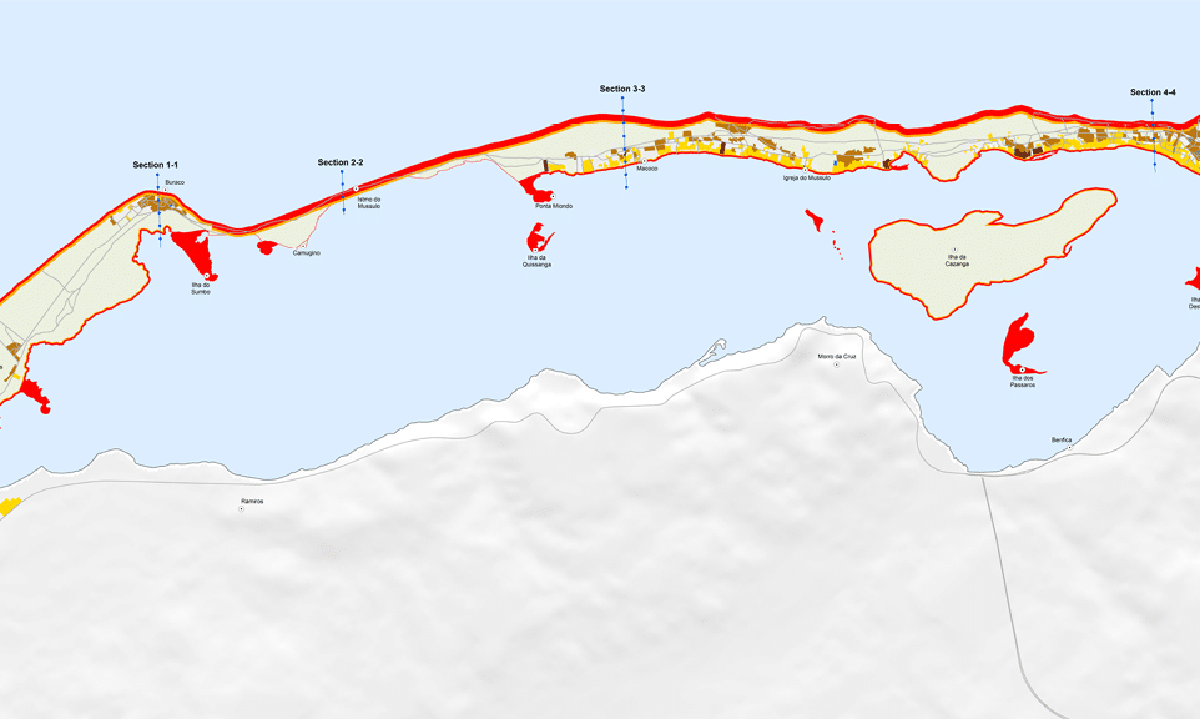
- Preparing topographical maps highlighting low-lying areas at risk of inundation
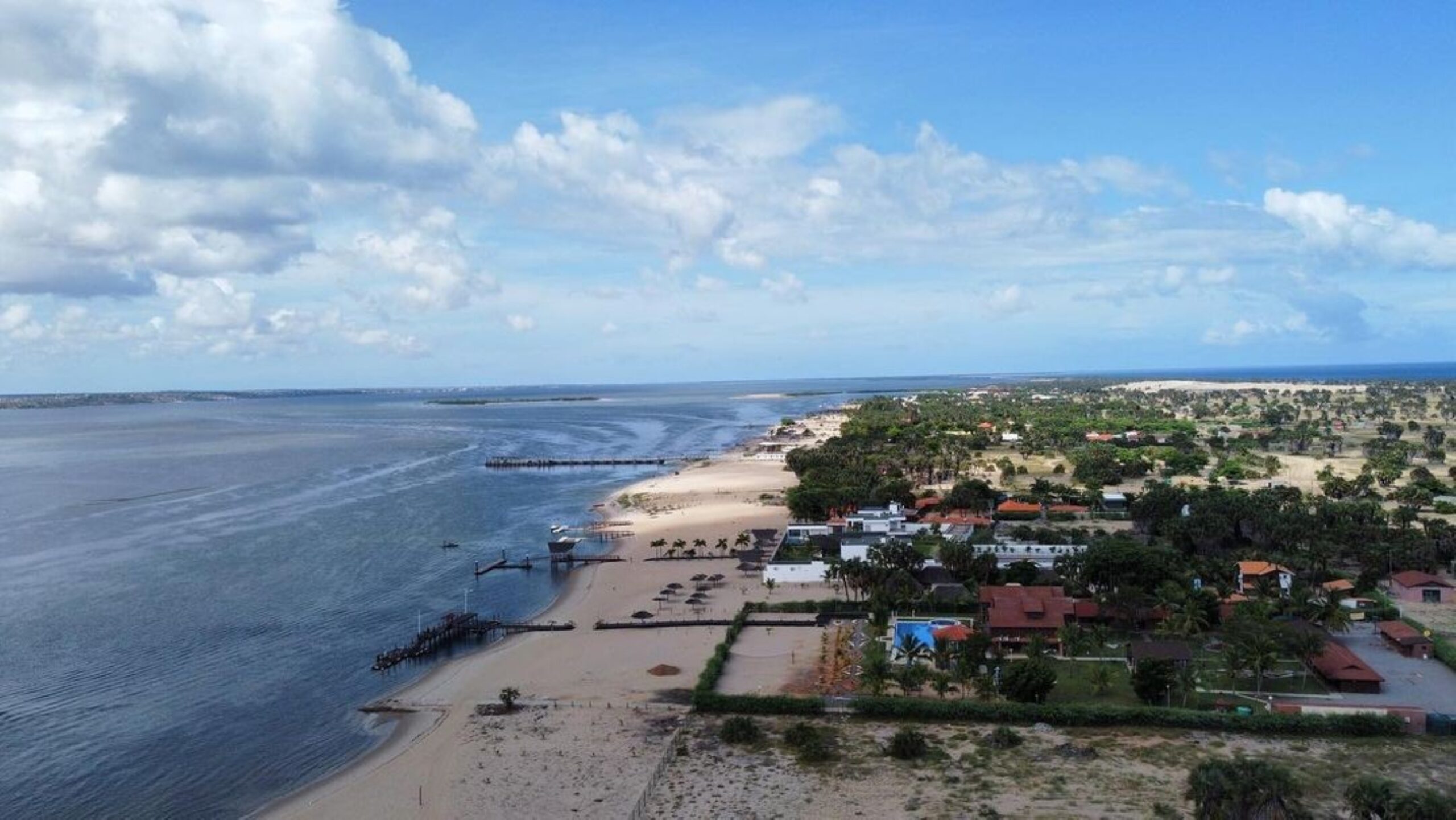
- Mapping the coastline into sandy, tidal flat, and mangrove zones, marking exposed settlements
- Assessing hazards to establish setback buffers for sustainable development
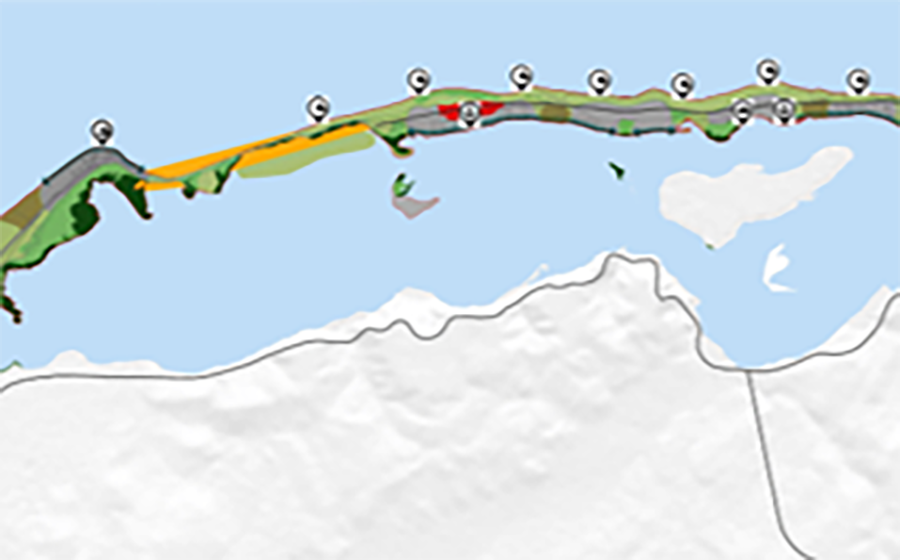
- Evaluating long-term coastal protection strategies and climate adaptation measures
A more detailed analysis followed, using SBeach to assess short-term storm erosion. Longer-term erosion and recession were evaluated with desktop analysis, considering extreme inundation and sea level rise scenarios. This led to a coastal vulnerability zoning map and preferred adaptation strategies for each zone.